%20%20-%20Menu.svg)




.png?width=879&height=549&name=Page%2074%20(1).png)

In this blog
TL;DR Summary
In-store shopping still dominates global retail in 2026, accounting for over 78% of all transactions despite sustained e-commerce growth.
-
Omnichannel customers shop 1.7x more frequently than single-channel buyers, delivering higher lifetime value according to McKinsey research.
- BOPIS, click-and-collect, and ship-from-store transform physical stores into hybrid fulfillment hubs, cutting last-mile costs while boosting satisfaction.
- Tactile evaluation drives in-store preference because shoppers assess fit, texture, and color accuracy before committing, reducing return rates significantly.
-
ClickPost serves 450+ global brands across 600+ carrier integrations, helping omnichannel retailers reduce return-to-origin rates by 20–40%.
- Cart abandonment reaches 70.19% globally, leading cost-sensitive shoppers toward in-store purchases that eliminate unexpected shipping and return fees.
Why Physical Retail Is Thriving in 2026 (Not Dying)
Physical retail was supposed to die. That narrative has circulated since the early ecommerce boom, and it gained momentum during the pandemic. Yet here we are in 2026, and stores are not only surviving, they are becoming smarter, more connected, and operationally more valuable than ever before.
The conversation has moved on from online versus offline. What matters now is how well retailers connect both worlds into a single, seamless experience. Customers want the speed of ecommerce combined with the confidence of in-store shopping. Brands that understand this are growing. Those that treat the physical store as a standalone channel are losing ground fast.
This article explains why in-store shopping still commands strong customer preference, how omnichannel models are reshaping physical retail, and what logistics infrastructure makes it all work at scale.
What Is In-Store Shopping in 2026? (Definition and Models)
In-store shopping traditionally means a customer visits a physical retail location, browses products, and completes a purchase on-site. In 2026, that definition has expanded considerably.
Most in-store journeys now begin online. A customer researches a product on their phone, checks local store inventory, visits to evaluate the item in person, and completes the transaction either at the counter or through a connected fulfillment option like curbside pickup or same-day delivery.
Physical retail today covers a wider range of models:
- Traditional walk-in shopping: Browse, evaluate, and purchase on-site
-
BOPIS (Buy Online, Pick Up In-Store): Order digitally, collect in-store
- Click and Collect: Reserve or purchase online, pick up at a designated point
- Ship-from-Store: Online orders fulfilled directly from store inventory
-
Endless Aisle: In-store kiosks extending product availability beyond shelf stock
- Dark Stores: Fulfillment-only locations converted from underperforming retail space
Each model blends the physical and digital touchpoints that modern shoppers now expect as standard.
Why In-Store Shopping Still Matters in 2026: Stats and Consumer Behavior
Despite sustained ecommerce growth, physical retail remains the dominant channel by transaction volume. Worldwide market forecast says global eCommerce revenue is projected to reach US$3.88 trillion in 2026. That growth is significant, but ecommerce still represents roughly 20-22% of total global retail. The vast majority of purchases still happen offline.
The reasons are rooted in consumer behavior.
-
Immediate gratification is something ecommerce cannot replicate. A customer who needs a product today, whether a last-minute gift, a replacement part, or a same-day wardrobe item, cannot wait for delivery. Physical stores solve this instantly.
-
Tactile evaluation drives store preference for entire product categories. Apparel, footwear, skincare, furniture, and consumer electronics all carry a significant evaluation risk when purchased sight-unseen. Customers want to check fit, texture, weight, color accuracy, and build quality before committing. Stores remove that uncertainty entirely.
-
Trust building is another factor digital channels still struggle to match. PwC's latest global consumer insights research shows that nearly half of consumers still prefer in-store shopping for the ability to see, touch, and try products, while seamless omnichannel experiences remain one of the strongest drivers of brand loyalty.
-
Return friction pushes many customers toward physical purchases. Baymard Institute's 2026 checkout usability research shows that unexpected costs remain a leading cause of cart abandonment, with the global cart abandonment rate at 70.19%. In-store purchases avoid shipping and return-fee surprises entirely, which can make them more appealing for cost-sensitive shoppers.
Online Shopping vs In-Store Shopping: What Do Customers Actually Prefer?
The honest answer is that customers prefer both, depending on the category, moment, and stage of their purchase journey. Forcing a binary choice misses the point entirely.
| Factor | Online Shopping |
In-Store Shopping
|
| Speed of purchase | Fast digital checkout |
Immediate product access
|
| Product evaluation | Photos, reviews, size guides |
Physical touch, fit, and try
|
| Price comparison | Easy multi-tab browsing |
Limited to shelf tags
|
| Returns | Can involve shipping costs and delays |
Instant counter exchange
|
| Human assistance | Chatbots and FAQs |
Live staff, personalised service
|
| Impulse discovery | Algorithm-driven recommendations |
Visual merchandising and displays
|
| Delivery wait time | Hours to several days | Zero |
| Trust for new brands | Lower without reviews or physical proof |
Higher with in-person experience
|
| Convenience | Available 24/7 |
Limited to store hours
|
| Omnichannel options | BOPIS, click-and-collect, ship-to-store |
Same-day delivery from store
|
McKinsey's 2026 retail research reinforces that omnichannel is about channel integration, not channel competition. Retailers that connect physical and digital experiences more effectively are better positioned to capture demand and avoid losing sales at either touchpoint.
Top 7 Advantages of In-Store Shopping Over Online Retail
1. Immediate Product Access With Zero Delivery Wait
No delivery window, no warehouse cut-offs, no logistics exceptions. Customers walk out with exactly what they came for. This advantage is irreplaceable for time-sensitive purchases and entirely unavailable through standard ecommerce fulfillment.
2. Faster Purchase Decisions Thanks to Hands-On Evaluation
In-store environments are built to accelerate decisions. Visual merchandising, hands-on display, and staff recommendations reduce the cognitive overload that drives online cart abandonment. Customers who can see, touch, and compare products in person are far more likely to convert on the same visit.
3. Superior Product Evaluation Before You Buy
Fit, texture, weight, sound quality, color accuracy under natural light: these dimensions are nearly impossible to convey digitally. For apparel, electronics, skincare, and home furnishings, in-store evaluation meaningfully reduces return rates and post-purchase regret.
4. Easier In-Store Returns and Same-Day Exchanges
Deloitte's 2026 Retail Outlook highlights customer experience, AI, and operational discipline as core retail priorities, reinforcing that fast, low-friction service helps build loyalty and repeat purchase. Unlike reverse logistics for online orders, in-store returns are resolved at the counter instantly.
5. Human Assistance That Algorithms Can't Replicate
Skilled floor staff do things algorithms cannot: they read customer hesitation, ask qualifying questions, make genuinely relevant recommendations, and close sales through conversation. This remains one of the clearest competitive advantages of physical retail for complex or considered purchases.
6. Omnichannel Fulfillment Convenience: BOPIS and Click-and-Collect
Physical stores increasingly serve as fulfillment collection points. Customers who order online and choose in-store pickup get ecommerce speed combined with the certainty of physical collection. Missed deliveries, porch theft, and delivery window anxiety all disappear. For more on how post-purchase experience shapes loyalty, the research is consistent: convenience at collection drives repeat purchase.
7. Stronger Brand Trust Through Physical Store Experience
A well-designed physical store communicates brand stability and product quality in ways a website cannot fully replicate. For premium and emerging brands alike, the store environment is part of the brand experience, not just a sales channel.
How Omnichannel Retail Is Redefining Physical Stores in 2026
BOPIS and Click and Collect: From Differentiator to Baseline Expectation
BOPIS and click-and-collect have moved from differentiator to baseline expectation. Forrester's 2026 retail research shows that click-and-collect remains an important bridge between digital and physical retail. In-store pickup helps retailers cut last-mile delivery costs while giving shoppers a faster, more convenient option that can also drive incremental in-store purchases at collection.
Ship-from-Store: How Retailers Are Using Store Inventory to Fulfill Online Orders
Retail Dive's 2026 coverage highlights ship-from-store as a core omnichannel model, enabling retailers to fulfill orders from the nearest store, improve speed, and make existing store inventory financially more productive. Tight inventory management is the operational backbone that makes this model reliable.
Endless Aisle: Removing Stock Limits From Physical Retail
In-store kiosks connected to full digital inventory let customers order products not currently on the shelf without leaving the brand environment. This removes the stock ceiling that once made physical retail feel limited compared to online browsing.
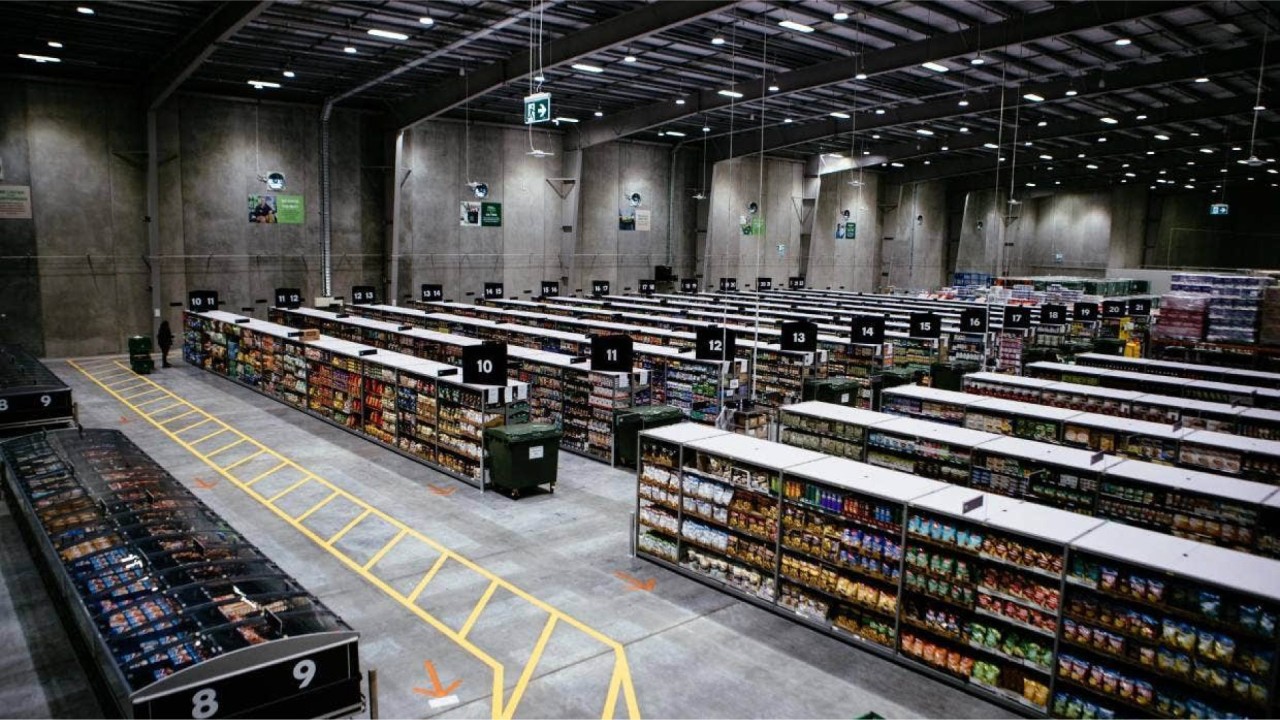
Dark Stores: Converting Underperforming Locations Into Fulfillment Nodes
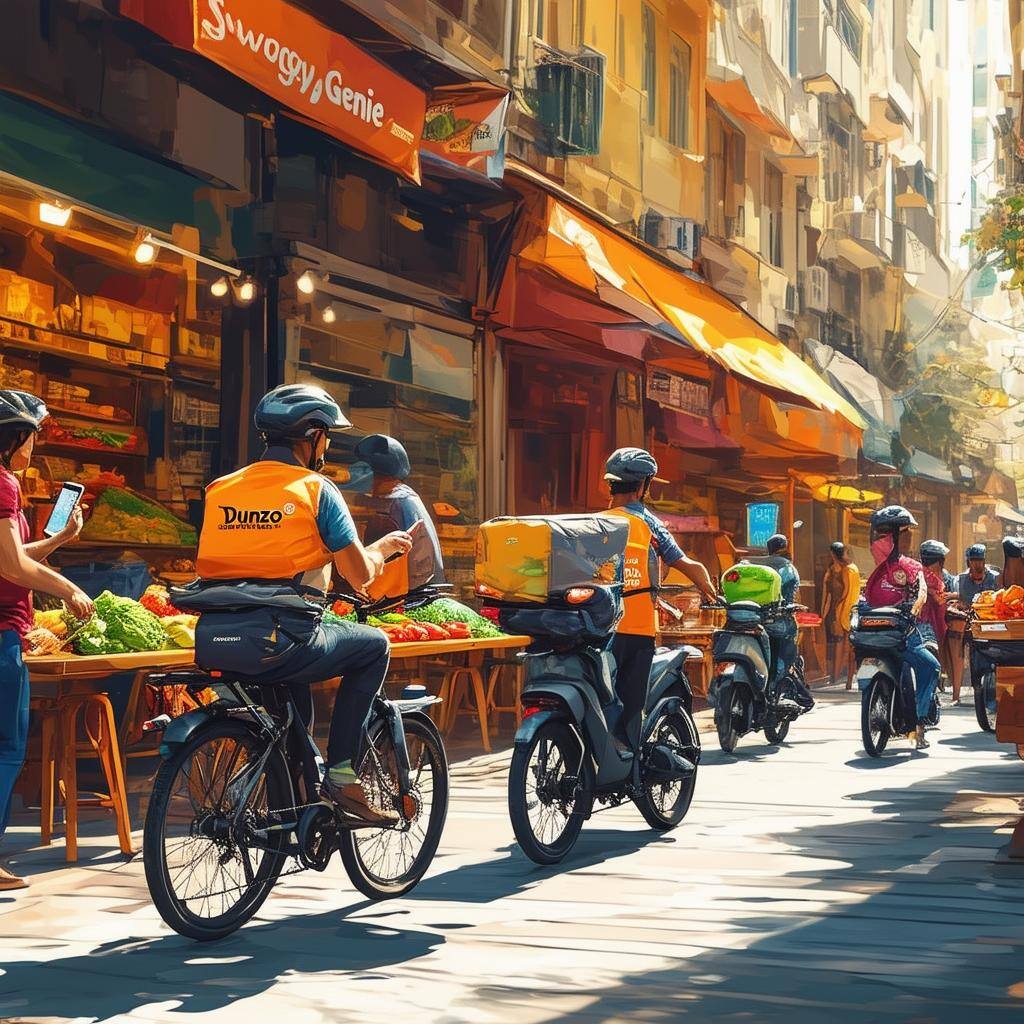
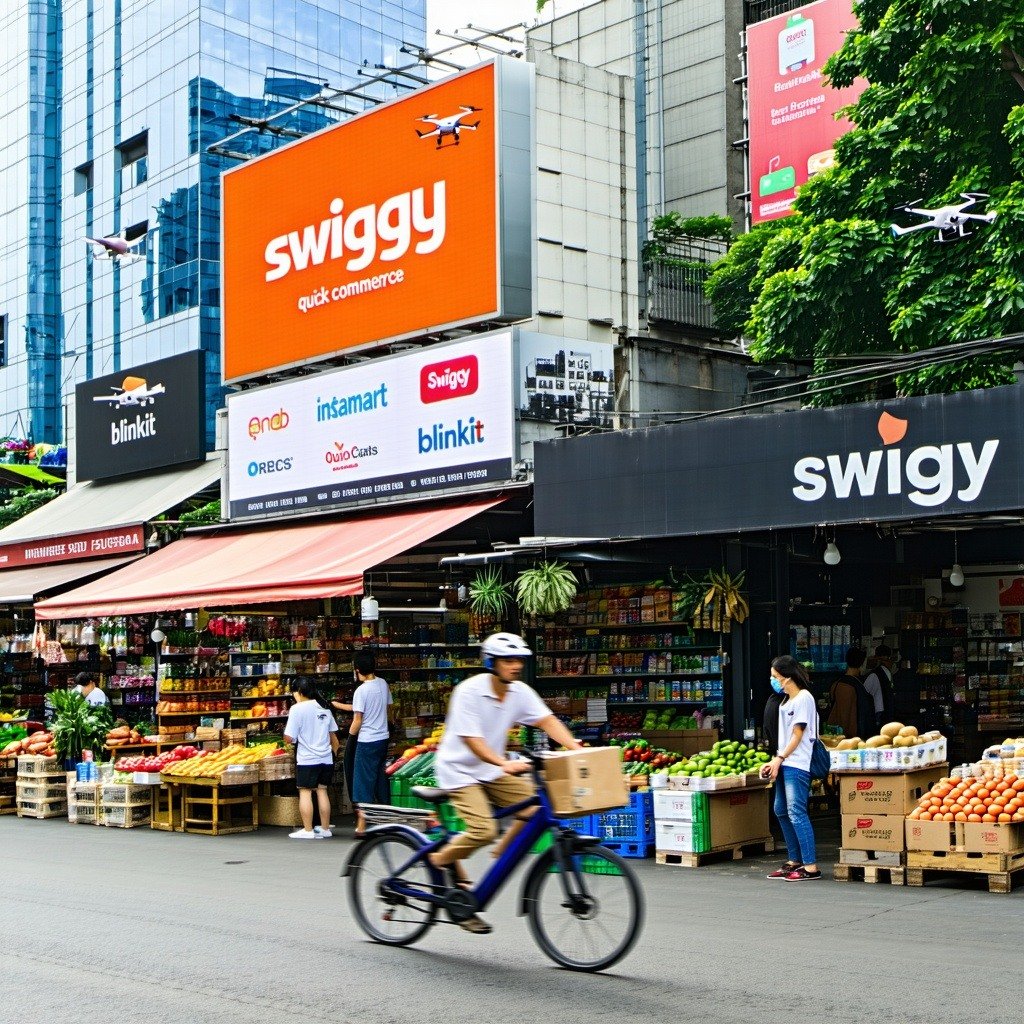
Converted retail spaces repurposed as pure fulfillment centers have expanded rapidly in urban markets. Rather than closing underperforming locations, retailers are turning them into local distribution nodes. Redseer's 2026 research shows that dark-store expansion remains a major driver of hyperlocal commerce in India, especially in Tier 1 cities where quick commerce continues to scale. The growth of ultra-fast delivery models is making localized fulfillment infrastructure more important to retail execution than ever before.
Retail Fulfillment Hubs: Hybrid Shopping and Distribution Floors
Large-format stores in major metros are being reconfigured to run fulfillment operations alongside traditional shopping floors. This hybrid model improves real estate ROI while dramatically reducing delivery lead times for nearby customers.
How Omnichannel Retail Is Evolving in India and the GCC in 2026
India and the GCC are two of the fastest-growing omnichannel retail markets globally, and their trajectories differ from Western markets in instructive ways.
Research shows that India's hyperlocal delivery and quick-commerce ecosystem continues to expand, with dark-store networks and rapid fulfillment playing a central role in growth. The sector is becoming more infrastructure-led, with speed, density, and localized inventory management shaping competitive advantage.
In the UAE and broader GCC, Dubai has emerged as a regional benchmark for omnichannel infrastructure. Euromonitor's 2026 Middle East retail coverage indicates that UAE ecommerce growth remains strong, driven by smartphone adoption, logistics strength, and globally informed consumer expectations, while click-and-collect is expanding fastest in mall-based retail environments. Logistics aggregators operating in the UAE have played a significant role in enabling this shift.
APAC retail trends broadly point toward mobile-first, hyperlocal, and experience-led physical retail as the dominant growth trajectory through 2027.
Why Logistics Infrastructure Is Critical to the Modern In-Store Experience
A customer visiting a store in 2026 often has a digital thread attached to that trip. They may have checked live inventory online before leaving home, received a notification about in-store availability, or initiated an online return they plan to drop off at the counter. Every one of these touchpoints depends on logistics infrastructure working accurately behind the scenes.
When it breaks down, the in-store experience suffers directly. An inventory system showing a product as available when it is not wastes the customer's trip and destroys trust. A returns counter that cannot locate an online order creates frustration that no staff member can fully recover. A BOPIS order not ready on arrival undermines the entire premise of the model.
Unified commerce has become a measurable 2026 priority, not just a strategy theme. With only 7% of retailers at true leadership level and 66% of consumers moving across multiple channels before purchase, real-time inventory visibility and connected fulfillment are now operational necessities rather than optional upgrades.
Accurate estimated delivery promises are now a baseline customer expectation, not a differentiator. Shoppers want a specific fulfillment window, not a date range.
Common Challenges in In-Store and Omnichannel Retail Operations (and How to Fix Them)
Inventory Visibility Across Stores, Warehouses, and Dark Stores
Real-time inventory accuracy across stores, warehouses, and dark stores underpins every omnichannel promise. Without it, BOPIS orders fail, ship-from-store creates overselling, and endless aisle commitments cannot be honoured. This is the foundational data layer that makes everything else possible. Investing in a robust warehouse management system is often the first step retailers take to close this gap.
Fulfillment Delays That Erode the Speed Advantage of Store-Based Shipping
Connecting an online order to the nearest available in-store stock requires tight integration between order management, warehouse systems, and carrier networks. Gaps in this chain create delays that erode the speed advantage of store-based fulfillment entirely.
Returns Complexity in Omnichannel Retail
Omnichannel returns are operationally complex. A customer who purchased online and wants to return in-store requires the retailer to reconcile digital order data with physical inventory systems in real time. Without proper tooling, this creates counter friction that damages satisfaction at a high-value customer touchpoint. The best returns management software platforms handle this reconciliation automatically.
Customer Communication Gaps During Delivery Exceptions
When an order is delayed, rerouted, or unavailable, customers expect immediate and proactive communication. Retailers relying on manual outreach or generic carrier notifications consistently fall short. In high-COD markets like India, COD order management and automated notifications close this gap at scale.
Disconnected Systems Between Ecommerce, POS, and Logistics
Many retailers still operate separate systems for ecommerce, POS, inventory, and logistics. This fragmentation creates blind spots that make unified commerce difficult to execute operationally. Brands that integrate carrier networks and consolidate fulfillment data into a single view gain a measurable operational advantage. For Shopify merchants, Shopify order editing enables post-purchase modifications that reduce cancellations and preserve revenue on orders that would otherwise be lost.
Future Trends in Physical Retail and Omnichannel Commerce Through 2027
AI-Driven Inventory Forecasting and Demand Planning
AI is being deployed across demand planning, inventory allocation, and replenishment cycles. Retailers using AI-based forecasting are reducing stockouts while lowering carrying costs, with Gartner's 2025 Retail Technology Hype Cycle identifying AI-driven inventory management as approaching mainstream enterprise adoption. AI and machine learning in carrier allocation are advancing along a similar curve.
Smart Store Infrastructure: RFID, Computer Vision, and IoT Inventory Tracking
RFID, computer vision at the shelf edge, and IoT-connected inventory systems are enabling real-time stock tracking at the SKU level. This makes accurate BOPIS promises operationally viable, reduces shrinkage, and improves replenishment speed across large store networks.
Hyperlocal Fulfillment: How Sub-Two-Hour Delivery Is Becoming the Baseline
Sub-two-hour delivery is becoming a competitive baseline in urban markets across India, UAE, and broader APAC. Retailers with dense store networks are uniquely positioned to serve this demand by using existing locations as micro-fulfillment nodes, without the capital cost of building new warehouse infrastructure. Understanding the differences between hyperlocal and last-mile delivery is essential for retailers building this capability.
Retail Automation for BOPIS and Ship-from-Store Order Throughput
Automated picking systems within store-based fulfillment areas are improving throughput for BOPIS and ship-from-store orders without adding headcount. This makes store-based fulfillment financially sustainable at scale even as order volumes grow. Logistics automation is the enabling infrastructure behind this shift.
Unified Commerce: The Architecture That Replaces Multichannel and Omnichannel
Gartner's 2025 Retail Predictions place unified commerce adoption among enterprise retailers as a top-five strategic priority. Unlike multichannel retail, which manages channels separately, or omnichannel, which connects them after the fact, unified commerce operates from one shared real-time data layer across inventory, fulfillment, and customer data. Brands that build toward this architecture now will have a structural advantage within the next three to five years.
Methodology
The trends, statistics, and operational insights in this article were evaluated using published research from NRF, McKinsey, Deloitte, PwC, Gartner, Forrester, Baymard Institute, Retail Dive, Statista, Euromonitor, and RedSeer, with data drawn exclusively from reports and surveys published in 2024 and 2025. Operational observations are drawn from ClickPost's network of 450+ global brand partners operating across India, UAE, and APAC markets. Every statistic is cited with the originating source and report linked directly within the sentence.
How ClickPost Helps Omnichannel Retail Brands Scale Across India, UAE, and APAC
ClickPost is the platform brands graduate to when operational complexity outgrows basic shipping tools. Powering 450+ global brands across 600+ carrier integrations, ClickPost provides the connected logistics management layer that makes omnichannel retail function reliably across India, UAE, and APAC markets.
Carrier Allocation
AI-based carrier allocation routes every shipment to the best-performing carrier based on location, serviceability, delivery speed, and real-time performance data. This eliminates manual routing decisions and reduces failed deliveries without adding operational overhead.
Shipment Tracking
Real-time shipment visibility gives both operations teams and customers accurate status at every stage. The branded customer tracking experience keeps all post-purchase communication on-brand rather than handing customers off to generic carrier portals. A branded tracking page also creates an additional touchpoint for cross-sell and retention.
Returns and Exchanges
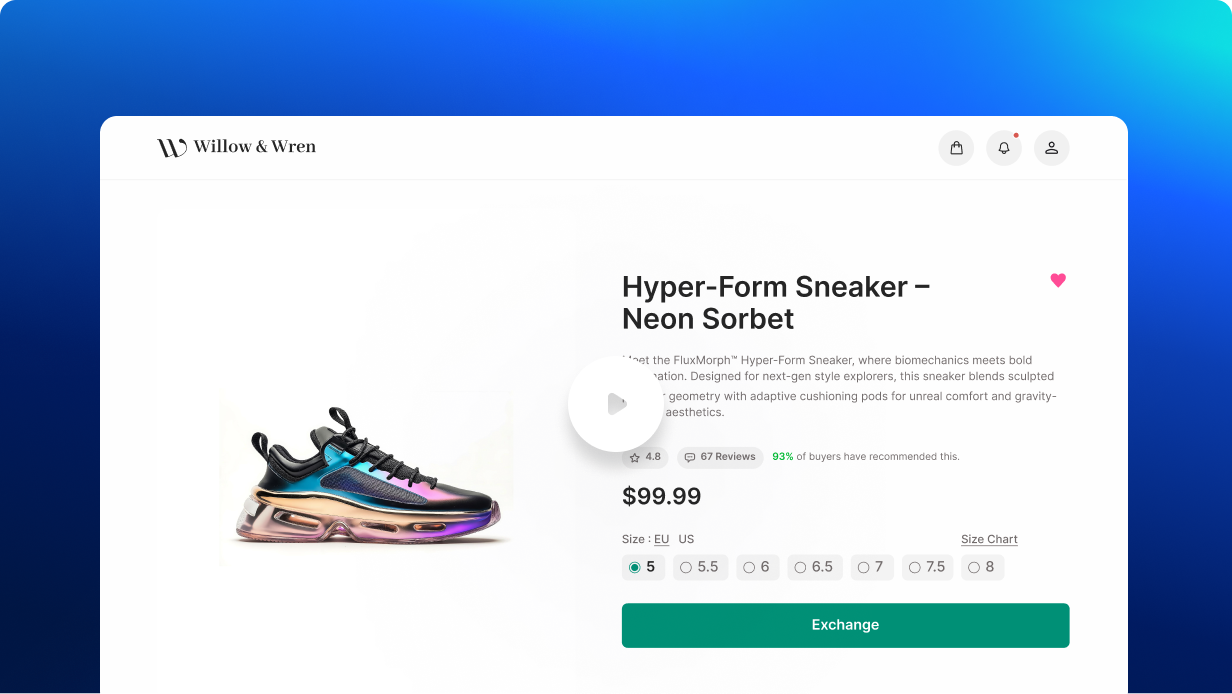
ClickPost converts 54% of returns into exchanges, enabling 39% higher-value exchanges on average. Brands using ClickPost returns and exchange management retain 40% of revenue through store credits that would otherwise leave as refunds. For omnichannel retailers, this directly protects physical store profitability by reducing the volume of returned inventory requiring restocking, retagging, or liquidation. The process of streamlining ecommerce returns is where significant margin recovery happens.
Customer Notifications
Proactive customer notifications and alerts keep shoppers informed through every stage from dispatch to delivery exception. Fewer surprises mean fewer WISMO (Where Is My Order) contacts and measurably lower support costs. Reducing WISMO inquiries is one of the fastest wins available to omnichannel operations teams.
NDR Management
Non-delivery reports are a primary driver of RTO losses, particularly in high-COD markets like India. Automated NDR workflows reach out to customers when delivery attempts fail, rescheduling or rerouting automatically before the order returns to origin. Brands using ClickPost NDR automation consistently report 20-40% reductions in RTO rates.
Apex Control Tower
The supply chain visibility platform gives operations and leadership teams a single unified view of all logistics activity across carriers, channels, and geographies. For omnichannel brands managing both ecommerce and store-based fulfillment simultaneously, this visibility is essential to identifying bottlenecks and optimizing performance in real time.
Brands including Style Union, Snitch, Forever New India, and Giva have scaled omnichannel operations on ClickPost infrastructure, using logistics analytics and reporting to track performance and continuously improve fulfillment outcomes.
Book a Demo to see how ClickPost powers omnichannel retail operations for 450+ brands globally.
Conclusion: The Future of In-Store Shopping Is Omnichannel
In-store shopping is not declining. It is evolving into something more capable and connected than traditional retail has ever been. Physical stores that integrate with digital fulfillment infrastructure, adopt BOPIS and click-and-collect models, and give customers genuine omnichannel flexibility are growing. Those that treat the store as an isolated channel are the ones losing relevance.
For brands scaling across India, UAE, and broader APAC, the logistics layer is what separates a well-designed omnichannel strategy from one that actually holds up operationally. ClickPost gives growing brands the infrastructure to deliver on omnichannel promises at the scale modern retail demands.
FAQs
Why do customers still prefer in-store shopping over online shopping in 2026?
Customers prefer in-store shopping for immediate product access, hands-on evaluation before buying, and frictionless returns. 77% of shoppers say the in-store experience is important or very important to them. Physical stores also build brand trust and eliminate delivery wait time entirely.
What is click and collect, and how does it work in omnichannel retail?
Click and collect means ordering a product online and collecting it from a physical store or pickup point instead of waiting for home delivery. After the order is confirmed ready, the customer visits the location and collects without going through a standard checkout queue. It combines the convenience of online ordering with the speed and certainty of physical collection.
Is online shopping or in-store shopping cheaper when you factor in all costs?
Online shopping often has lower listed prices due to easier price comparison and promotional codes. But in-store shopping avoids delivery fees, return shipping costs, and the risk of receiving something that does not match expectations. 48% of shoppers abandon carts specifically because of extra costs like delivery fees, making in-store purchasing more cost-certain for many buyers.
How does omnichannel retail actually work end-to-end?
Omnichannel retail connects a brand's physical and digital channels so customers get consistent inventory access, service, and fulfillment options regardless of where or how they shop. A customer can browse online, check live in-store stock, purchase through an app, collect from the nearest location, and return through any channel without friction. Ecommerce supply chain management is the operational layer that makes this consistency possible.
Why are retailers turning physical stores into fulfillment centers?
Store-based fulfillment shortens last-mile delivery distance and speeds up processing. Inventory already positioned close to the customer enables same-day and next-day delivery without building dense warehouse networks. Retailers using order fulfillment services built around store inventory report significant improvements in delivery speed and cost per shipment.
What does BOPIS mean in retail, and why is it growing so fast?
BOPIS stands for Buy Online, Pick Up In-Store. It lets customers place an order digitally and collect it from a physical store, combining online convenience with in-store immediacy. Click-and-collect orders now represent over 20% of online transactions at major multichannel retailers, with basket values running higher than home delivery orders.
How does hyperlocal fulfillment work in fast-growing markets like India and UAE?
Hyperlocal fulfillment uses dark stores, store-based inventory, or local distribution nodes to fulfill orders within a few hours. In India the quick commerce market surpassed $6 billion GMV in 2024-25, with dark store density expanding rapidly across Tier 1 cities. In the UAE, ecommerce grew over 12% year-on-year backed by strong urban logistics infrastructure.
What impact do product returns have on physical retail profitability?
Returns are a direct revenue leak. Every returned item carries reverse logistics costs, restocking labor, and potential inventory depreciation. Retailers that convert returns into exchanges rather than refunds retain far more revenue per transaction. ClickPost's returns and exchange management converts 54% of returns into exchanges and retains 40% of revenue through store credits that would otherwise leave as refunds.
What delivery expectations do omnichannel customers have in 2026?
Omnichannel customers expect a precise delivery or pickup window, proactive communication when anything changes, and flexible fulfillment options including same-day delivery, click-and-collect, and BOPIS as standard features.
How does logistics infrastructure directly affect the in-store shopping experience?
Behind every smooth omnichannel visit is logistics infrastructure managing live inventory data, carrier routing, real-time tracking, and returns processing. When that infrastructure is fragmented, customers face broken BOPIS promises, inaccurate stock availability, and slow return resolutions. Brands that consolidate logistics operations into a connected platform deliver better in-store experiences as a direct operational outcome.